Industrial painting operations require a controlled environment to achieve consistent coating quality, reduce overspray, and…
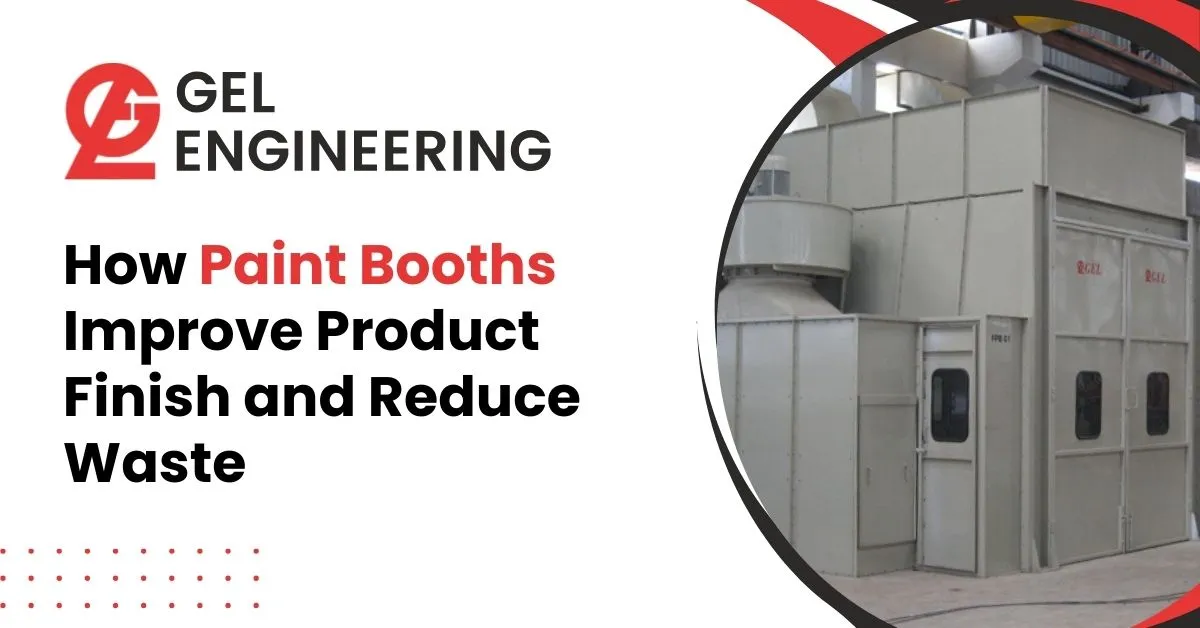
A well-designed paint booth does more than keep dust out — it directly improves product finish, reduces rework, and slashes material waste. For manufacturers in automotive, aerospace, furniture, metal fabrication, and heavy equipment, investing in the right booth and filtration strategy translates to measurable gains: fewer defects, lower consumables cost, faster throughput, and better regulatory compliance. Below is a deep, practical guide on how paint booths achieve this, the engineering principles behind them, and actions you can take immediately to see results.
Why are finish quality and waste linked?
Poor paint finishes (runs, orange peel, dust nibs, sags) usually force sanding and recoating. Every recoat uses more paint, solvents, labor, and energy — quickly multiplying costs. A controlled spray booth minimizes those failure modes by controlling the environment where coating is applied and cured, so the first coat is more likely to be the last coat.
Controlled airflow removes contaminants that ruin finishes
The single most important function of a paint booth is to manage airflow. Downdraft, side-downdraft, and crossdraft booths are engineered to pull clean, filtered air across the part and carry overspray away from the surface into exhaust filters. That consistent airflow prevents airborne dust and overspray from settling on wet paint — the main cause of surface defects.
- Downdraft booths pull contaminants downward and away from the part for the cleanest finish.
- Proper airflow balance reduces turbulence (which causes orange peel and texture defects).
(For regulatory and ventilation guidance, see OSHA 1910.107.)
Multi-stage filtration captures overspray and protects the environment
Modern booths use multiple filtration stages: intake filters, pre-filters/overspray arrestors, and exhaust filters (often with activated carbon or HEPA for fine particulates and VOC control). Capturing overspray inside the booth prevents it from redepositing on parts and reduces emissions and waste.
- EPA guidance for spray booths explains how exhaust filters/overspray arrestors decrease emissions and protect air quality.
- NESHAP rules require exhaust systems that can demonstrate high capture efficiencies (often ≥98% for some operations), which reduces wasted paint vented to the environment.
HEPA & specialty filtration improve finish consistency for demanding industries
When ultra-clean finishes are required (aerospace, electronics, medical equipment), HEPA or ULPA filtration is used to remove sub-micron particles that standard filters miss. HEPA filters remove ~99.97% of particles ≥0.3 microns when properly installed and tested — eliminating microscopic contaminants that cause subtle finish issues.
Temperature and humidity control reduce rework and wasted coating
Many defects are caused by improper cure conditions. Booths with integrated air makeup units (AMUs) and precise temperature/humidity controls ensure coatings flash off and cure uniformly. Faster, consistent curing reduces tackiness and contamination window — meaning fewer touch-ups and less wasted paint.
Improved transfer efficiency — less paint used for the same coverage
Operator technique and equipment matter, but a booth that optimizes environmental conditions and uses the right filtration and airflow enables higher transfer efficiency (a greater proportion of sprayed paint reaching the part). Higher transfer efficiency means less overspray and less paint used per job — directly cutting material costs and waste. (Best-practice training and certified operator programs are often mandated for compliance.)
Safety, compliance, and lower indirect waste (insurance, downtime)
Compliant booths reduce incidents (fires, emissions violations). Standards such as NFPA 33 set requirements to mitigate fire/explosion hazards in spray operations — following them avoids costly shutdowns, fines, and insurance losses that indirectly add to waste and downtime.
Need to improve finishes and cut coating waste? Contact us for custom paint booth design, filtration upgrades, and turnkey installations tailored to your production needs.
Practical steps you can implement today to improve finish and cut waste
- Balance and test airflow — use a manometer to confirm the designed static pressures.
- Adopt multi-stage filtration — intake → overspray arrestor → exhaust HEPA/carbon where needed. EPA guidance helps select arrestors.
- Standardize operator training — correct gun technique, pressures, and distances increase transfer efficiency (NESHAP emphasizes operator certification).
- Control curing conditions — add AMU or infrared/convection curing to reduce tack windows.
- Log filter life & pressure trends — replace filters when pressure drop indicates loading to avoid energy waste and poor filtration. (See local filter-management best practices.)
- Regular booth cleaning and maintenance — remove paint build-up, which can become airborne and contaminate fresh parts. OSHA notes accessibility and cleaning requirements for booths.
Benefits of Paint Booth
- Fewer defects / lower rework → saves paint, labor, and time.
- Reduced paint & solvent consumption through higher transfer efficiency.
- Lower VOC emissions and compliance risk via effective exhaust filtration.
- Improved throughput from faster curing and less rework.
- Safer workplace and reduced insurance/exposure cost when built to NFPA/OSHA standards.
Frequently Asked Questions
Q: How does a paint booth reduce overspray?
A: By using controlled airflow patterns and multi-stage filters that capture paint mist before it settles or exits the booth.
Q: Will installing HEPA filters improve my finish?
A: Yes — HEPA filters remove sub-micron particles that cause subtle surface defects; they’re recommended for aerospace and cleanroom-level finishes.
Q: Do booths help meet environmental regulations?
A: Properly filtered exhaust systems help meet EPA/NESHAP capture and emissions requirements, lowering regulatory risk.
Q: How often should paint booth filters be changed?
A: Frequency depends on workload and paint type; monitor static pressure and replace filters when pressure differentials indicate loading. EPA and manufacturers provide replacement guidance.
Q: What standards should my booth follow for safety?
A: Follow OSHA 1910.107 for spray operations and NFPA 33 for fire/explosion prevention in spray applications.
Conclusion
A correctly specified and operated paint booth is an investment that pays back through improved product finish, lower material waste, and stronger regulatory compliance. The benefits are technical (filtration, airflow, curing), operational (training, maintenance), and financial (lower consumables, less rework). If you want to reduce waste and boost finish quality, start with airflow and filtration — and ensure your system meets OSHA, NFPA and EPA/NESHAP guidance.
Related Posts