Industrial painting operations require a controlled environment to achieve consistent coating quality, reduce overspray, and…
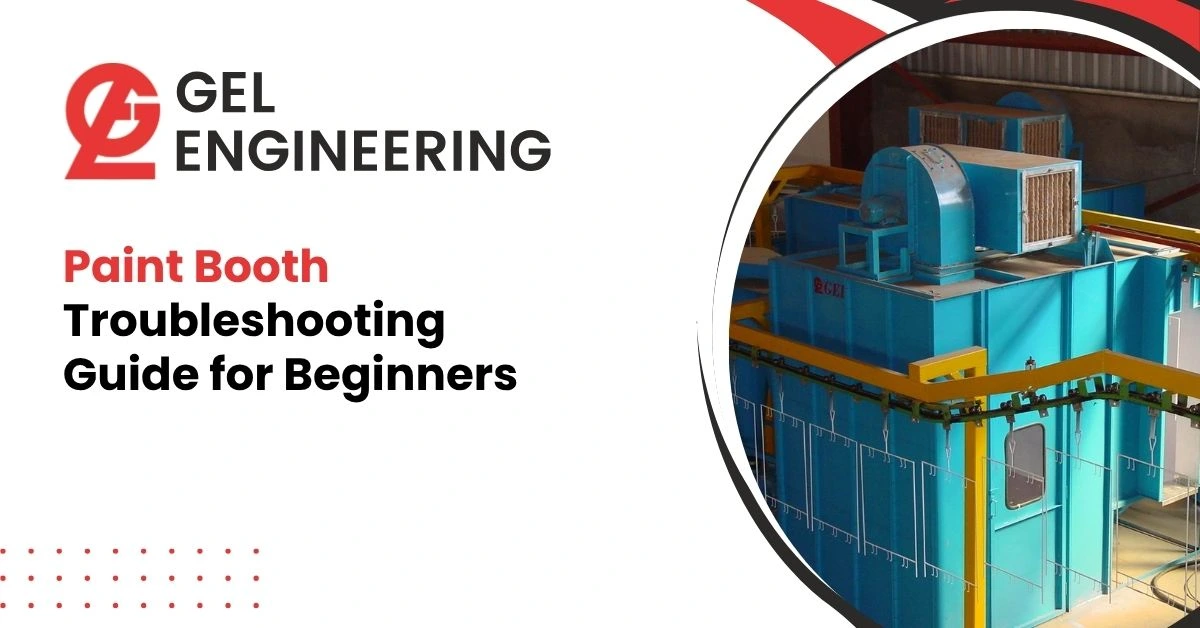
A Paint Booth is designed to create a controlled environment for industrial painting, helping manufacturers achieve consistent coating quality, efficient overspray control, and a safer workplace. However, issues such as poor airflow, dust contamination, excessive overspray, and uneven paint finishes can affect performance and productivity.
Table of Contents
For beginners, troubleshooting a paint booth may seem challenging, but many common problems can be identified and resolved through systematic inspection and maintenance. This guide covers the most frequent paint booth issues, their possible causes, and practical solutions to help keep your painting operations running efficiently.
Poor Airflow in the Paint Booth
Proper airflow is one of the most critical Paint Booth parameters. When airflow is reduced, overspray removal becomes less effective, and coating quality may suffer.
Possible Causes
- Clogged intake filters
- Dirty exhaust filters
- Fan performance issues
- Blocked ductwork
- Incorrect airflow settings
How to Check
- Inspect intake and exhaust filters for blockage
- Verify airflow readings against recommended specifications
- Check for unusual fan noise or vibration
- Examine ductwork for obstructions
Solution
Replace clogged filters, clean ventilation components, and ensure airflow settings match the recommendations provided in the paint booth manual.
Excessive Overspray Inside the Paint Booth
A Paint Booth should efficiently remove overspray from the painting area. If overspray accumulates on booth surfaces, equipment performance may be compromised.
Possible Causes
- Restricted airflow
- Saturated filters
- Improper spray gun settings
- Poor exhaust performance
How to Check
- Inspect filter condition
- Monitor airflow consistency
- Check exhaust fan operation
- Review spray application practices
Solution
Maintain filters regularly, verify exhaust system performance, and ensure proper painting techniques are being used.
Dust and Contamination Problems
Dust contamination is a common issue that can lead to coating defects and costly rework.
Possible Causes
- Damaged filters
- Gaps around booth doors or panels
- Poor housekeeping practices
- Inadequate booth cleaning
How to Check
- Inspect filters for wear or damage
- Check booth seals and door closures
- Review cleaning schedules
- Examine the work area for dust sources
Solution
Follow proper Paint Booth cleaning procedures, maintain booth integrity, and replace damaged filters promptly.
Paint Booth Filters Clogging Too Quickly
Filters play a crucial role in maintaining airflow and capturing paint particles. Frequent clogging can affect overall paint booth performance.
Possible Causes
- High paint volume
- Incorrect filter selection
- Excessive overspray generation
- Lack of routine maintenance
How to Check
- Review filter replacement frequency
- Inspect filter loading patterns
- Verify filter specifications
Solution
Use filters suitable for the application, monitor operating conditions, and follow a preventive maintenance schedule.
Looking to improve paint booth efficiency and coating performance? Contact us today for customized industrial painting and surface finishing solutions.
Uneven Paint Finish
When paint finishes become inconsistent, the Paint Booth Itself may be contributing to the problem.
Possible Causes
- Airflow imbalance
- Dust contamination
- Poor ventilation
- Temperature fluctuations
How to Check
- Measure airflow across the booth
- Inspect filters and ventilation systems
- Check environmental conditions
Solution
Maintain consistent airflow, keep the booth clean, and ensure all systems are operating within recommended parameters.
Strong Paint Odors Around the Paint Booth
Strong paint Odors outside the booth can indicate ventilation or filtration issues.
Possible Causes
- Exhaust system malfunction
- Damaged ductwork
- Filter failure
- Air leaks
How to Check
- Inspect exhaust airflow
- Check duct connections
- Examine filter condition
Solution
Repair leaks, replace damaged filters, and ensure the exhaust system is functioning properly.
Paint Booth Troubleshooting Checklist
A systematic approach can help identify paint booth issues before they affect production.
| Inspection Area | What to Check |
| Filters | Clogging, damage, replacement status |
| Airflow | Velocity and consistency |
| Exhaust System | Fan operation and airflow performance |
| Booth Interior | Overspray buildup and cleanliness |
| Ductwork | Obstructions or leaks |
| Doors and Seals | Dust entry points |
| Operating Conditions | Temperature and pressure levels |
This checklist can also serve as part of a regular Paint Booth Maintenance Checklist.
The Importance of a Paint Booth Manual
Every paint booth has specific operating requirements and maintenance recommendations. The Paint Booth Manual provides valuable guidance for:
- Troubleshooting procedures
- Filter replacement schedules
- Airflow requirements
- Safety practices
- Equipment maintenance
Before making adjustments to a paint booth, operators should always consult the manufacturer’s documentation.
Preventive Maintenance Reduces Troubleshooting Issues
Many Paint Booth problems can be avoided through proactive maintenance.
Key preventive measures include:
- Following routine inspections
- Replacing filters on schedule
- Monitoring paint booth parameters
- Keeping the booth clean
- Training operators on proper procedures
- Maintaining exhaust and ventilation systems
Preventive maintenance not only reduces downtime but also helps maintain coating quality and equipment reliability.
Frequently Asked Questions
What is the most common paint booth problem?
Poor airflow caused by clogged filters is one of the most common paint booth issues and can affect overspray removal and coating quality.
Why are Paint Booth Parameters important during troubleshooting?
Paint Booth Parameters such as airflow, pressure, and filtration performance help identify operational issues and maintain efficient booth performance.
How often should paint booth filters be inspected?
Filters should be inspected regularly based on production volume and operating conditions to ensure proper airflow and contamination control.
Why is a Paint Booth Maintenance Checklist useful?
A Paint Booth Maintenance Checklist helps identify potential issues early, reducing downtime and improving overall equipment reliability.
When should operators refer to the Paint Booth Manual?
Operators should consult the Paint Booth Manual when troubleshooting issues, performing maintenance, or adjusting operating settings.
Conclusion
A properly functioning Paint Booth is essential for achieving high-quality finishes, maintaining worker safety, and ensuring efficient industrial painting operations. By understanding common problems such as poor airflow, overspray buildup, filter issues, and contamination, beginners can troubleshoot paint booth performance more effectively. Regular inspections, adherence to Paint Booth Cleaning Procedures, monitoring of Paint Booth Parameters, and following a structured Paint Booth Maintenance Checklist can significantly reduce operational issues and keep painting processes running smoothly.
Related Posts