A Paint Booth plays an important role in industrial spray painting and surface finishing operations.…
Industrial painting operations require a controlled environment to achieve consistent coating quality, reduce overspray, and maintain workplace safety. Choosing the right spray paint booth is a critical decision that directly impacts productivity, maintenance costs, environmental performance, and finish quality.
Table of Contents
Among the most commonly used systems, Dry Paint Booths and Water Wash Paint Booths are preferred for a wide range of manufacturing applications. While both are designed to capture paint overspray and improve painting efficiency, they operate differently and offer distinct advantages depending on production requirements.
This article compares Dry Paint Booth vs Water Wash Paint Booth systems to help manufacturers determine the most suitable solution for their operations.
Understanding Dry Paint Booths
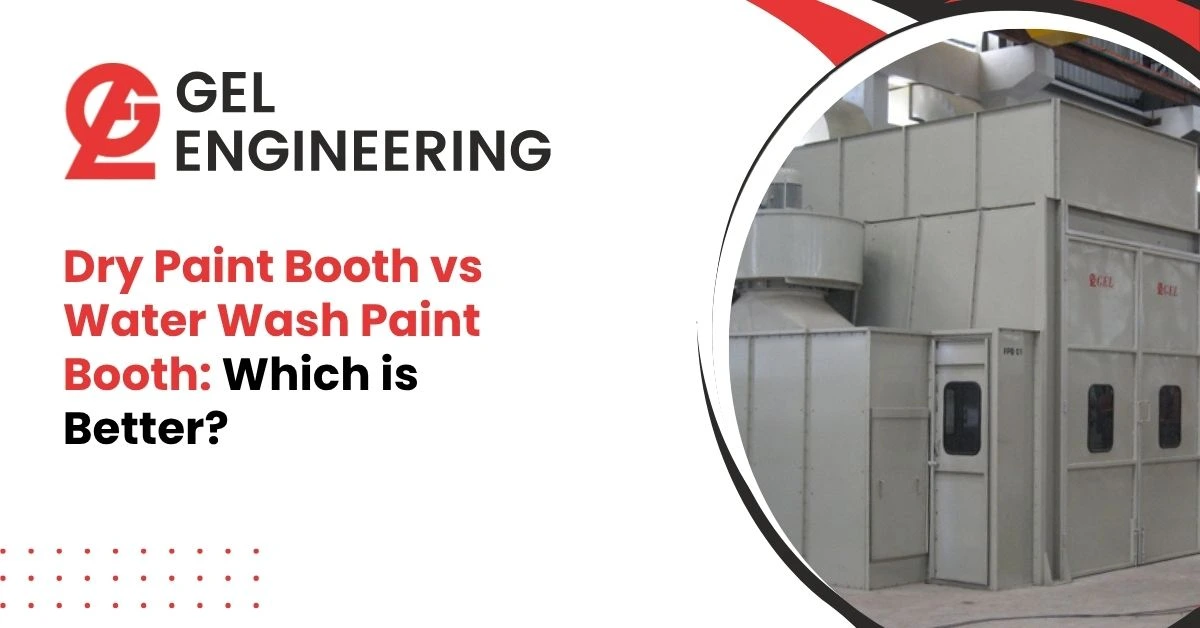
A Dry Paint Booth uses multi-stage filtration systems to capture paint overspray before it is released into the atmosphere. The overspray particles are trapped within filter media, keeping the working environment cleaner and ensuring efficient paint application.
Dry paint booths are widely used in industries where painting volumes are moderate and maintenance simplicity is important.
Key characteristics include:
- Dry filtration technology
- Easy installation and operation
- Lower initial investment
- Minimal water consumption
- Suitable for varied industrial applications
Understanding Water Wash Paint Booths
A Water Wash Paint Booth utilizes a continuous water curtain or water flow system to capture paint overspray. Paint particles are absorbed into the water stream and separated through filtration and treatment systems.
These booths are commonly preferred in high-volume painting environments where significant amounts of overspray are generated.
Key characteristics include:
- Water curtain overspray collection
- Efficient paint particle capture
- Cleaner booth interiors
- Suitable for continuous production environments
- Enhanced filtration efficiency for heavy-duty applications
Dry Paint Booth vs Water Wash Paint Booth: Key Differences
| Feature | Dry Paint Booth | Water Wash Paint Booth |
| Overspray Collection | Dry filters capture paint particles | Water curtain captures paint particles |
| Initial Investment | Generally lower | Generally higher |
| Maintenance Method | Filter replacement | Water treatment and system maintenance |
| Water Consumption | None | Requires continuous water usage |
| Operating Cost | Filter-related expenses | Water, chemical, and maintenance costs |
| Best For | Low to medium production volumes | Medium to high production volumes |
| Installation Complexity | Relatively simple | More complex system setup |
| Environmental Control | Effective with proper filtration | Highly effective overspray management |
Factors to Consider When Choosing a Paint Booth
Selecting between a Dry Paint Booth and Water Wash Paint booth system depends on several operational factors.
Production Volume
Manufacturers handling lower or moderate painting workloads often benefit from dry paint booths due to their simplicity and lower operating requirements. Facilities with continuous or large-scale painting operations may find water wash paint booths more suitable because of their ability to manage significant overspray loads efficiently.
Type of Coating Material
The type of paint, coating thickness, and overspray generation levels can influence booth selection. Certain coating processes generate higher overspray volumes, making water wash systems more effective.
Maintenance Requirements
Dry paint booths require regular filter inspection and replacement. Water wash systems require water circulation management, sludge removal, and periodic maintenance of pumps and filtration components.
Environmental and Regulatory Considerations
Industrial facilities must comply with environmental and workplace safety regulations. Both systems can support compliance when properly designed and maintained, but specific local regulations may influence the preferred solution.
Available Space
Dry paint booths generally have a simpler footprint, while water wash systems may require additional equipment for water handling and treatment.
Looking for a customized spray paint booth solution for your manufacturing facility? Contact us for Spray Paint Booth systems to meet specific production and surface finishing requirements.
Advantages of Dry Paint Booths
For many industrial finishing operations, Dry Paint Booths offer several operational benefits:
- Lower installation costs
- Simple operation and maintenance
- No water consumption
- Faster installation
- Reduced infrastructure requirements
- Suitable for diverse manufacturing environments
These advantages make dry paint booths a practical choice for many small to medium-scale industrial painting applications.
Advantages of Water Wash Paint Booths
For demanding production environments, Water Wash Paint Booths are often selected because they provide:
- Efficient overspray capture
- Cleaner working environment
- Better handling of high paint volumes
- Reduced paint particle accumulation inside the booth
- Improved booth cleanliness during continuous operation
These benefits are particularly valuable in industries with large-scale painting requirements.
The Importance of Paint Booth Filter Specification
Whether using a dry or water wash system, Paint Booth Filter Specification plays a vital role in booth performance.
Proper filtration contributes to:
- Improved coating quality
- Reduced contamination
- Better airflow management
- Extended equipment life
- Enhanced worker safety
- Regulatory compliance
Selecting the right filter specification should always align with paint type, production volume, airflow design, and operational requirements.
Which Paint Booth Is Better?
There is no universal answer because the ideal solution depends on operational goals.
A Dry Paint Booth is often the better choice when:
- Production volumes are moderate
- Simplicity is a priority
- Water usage must be minimized
- Lower capital investment is desired
A Water Wash Paint Booth is often the better choice when:
- Production volumes are high
- Significant overspray is generated
- Continuous painting operations are required
- Enhanced overspray management is needed
The most effective approach is to evaluate production demands, coating processes, maintenance capabilities, and long-term operational objectives before selecting a system.
Frequently Asked Questions
What is the main difference between a Dry Paint Booth and a Water Wash Paint Booth?
A Dry Paint Booth uses filtration media to capture paint overspray, while a Water Wash Paint Booth uses a water curtain system to collect and remove paint particles.
Which paint booth requires less maintenance?
Dry Paint Booths generally involve simpler maintenance procedures, primarily focused on filter replacement, whereas Water Wash Paint Booths require water system management and sludge removal.
Are Water Wash Paint Booths suitable for high-volume production?
Yes, Water Wash Paint Booths are commonly used in high-volume industrial painting applications because they effectively handle large amounts of overspray.
How important is Paint Booth Filter Specification?
Paint Booth Filter Specification is critical because it directly affects airflow, contamination control, coating quality, equipment performance, and workplace safety.
Do Dry Paint Booths use water?
No. Dry Paint Booths rely entirely on filtration systems and do not require water for overspray collection.
Conclusion
Choosing between a Dry Paint Booth and a Water Wash Paint Booth depends on production volume, coating requirements, maintenance preferences, and operational goals. Dry Paint Booths offer simplicity, cost-effectiveness, and easy maintenance, while Water Wash Paint Booths provide efficient overspray management for demanding industrial applications. By evaluating process requirements and selecting the appropriate Paint Booth Filter Specification, manufacturers can improve coating quality, workplace safety, and overall production efficiency.
Related Posts