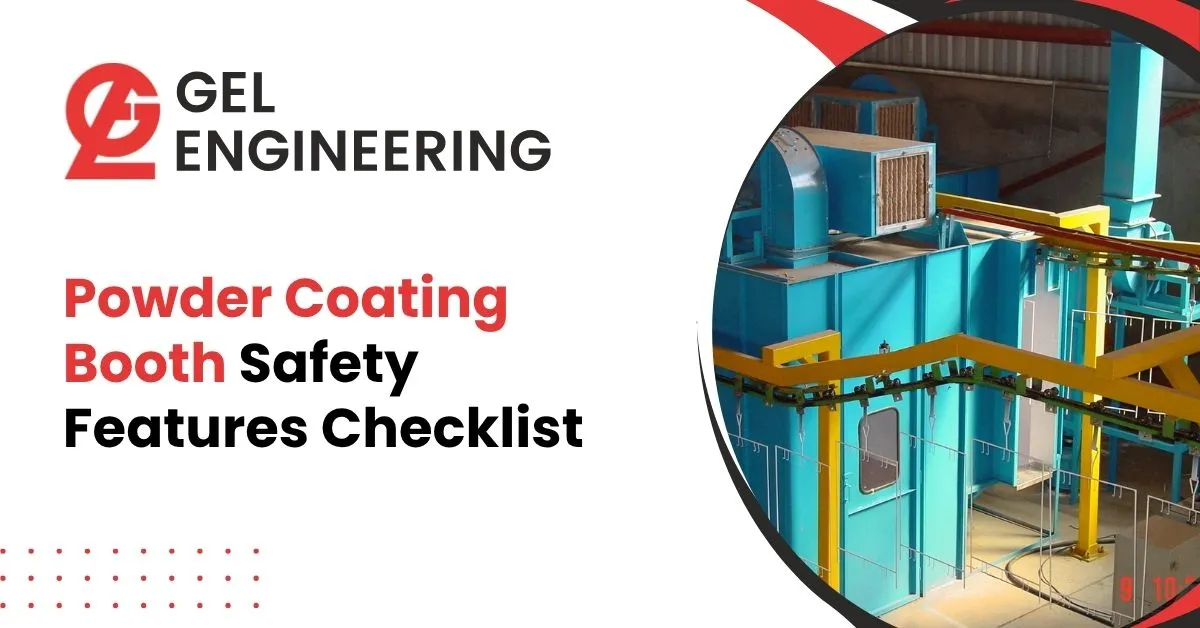
The design of powder booth ventilation is central to achieving a safe, efficient, and consistent powder coating process. Effective ventilation starts with a negative-pressure system: by drawing more exhaust air than is supplied, the booth ensures that airborne powder and contaminants are always directed away from operators and out through the ductwork. Achieving the right face or capture velocity—typically around 80–100 feet per minute depending on design—is critical to prevent powder from escaping the emission zone. To avoid turbulence and dead zones, the system should employ airflow diffusers or baffles that distribute flow evenly throughout the booth, ensuring stable, laminar movement of air. When recirculation is used, it must be paired with advanced filtration—using high-efficiency particulate filters (HEPA or cartridge) and activated carbon if needed—to clean the air thoroughly before returning it. The ventilation system should also handle temperature and humidity control to maintain powder characteristics, minimize clumping, and improve application consistency. In addition, ductwork design should consider static discharge, incorporate proper grounding, and be compliant with explosion-proof safety standards (e.g. ATEX). Monitoring systems—such as pressure gauges or anemometers—are vital for real-time checks on airflow performance and filter health. For maintenance, the booth should have easy-to-reach access points for cleaning, alongside safe cleaning protocols that use vacuum systems instead of compressed air. By integrating these ventilation practices, a powder coating booth ensures not just operational quality, but also compliance with safety regulations, reduces fire risk, and enhances worker comfort.
Powder coating is a highly efficient, durable, and eco-friendly finishing process—but working with powder comes with risks. Dust accumulation, electrostatic discharge, and fire or explosion hazards demand a robust safety setup. A well-designed powder coating booth is more than just…