In industrial spray painting, finish quality depends not only on paint material and technique but…
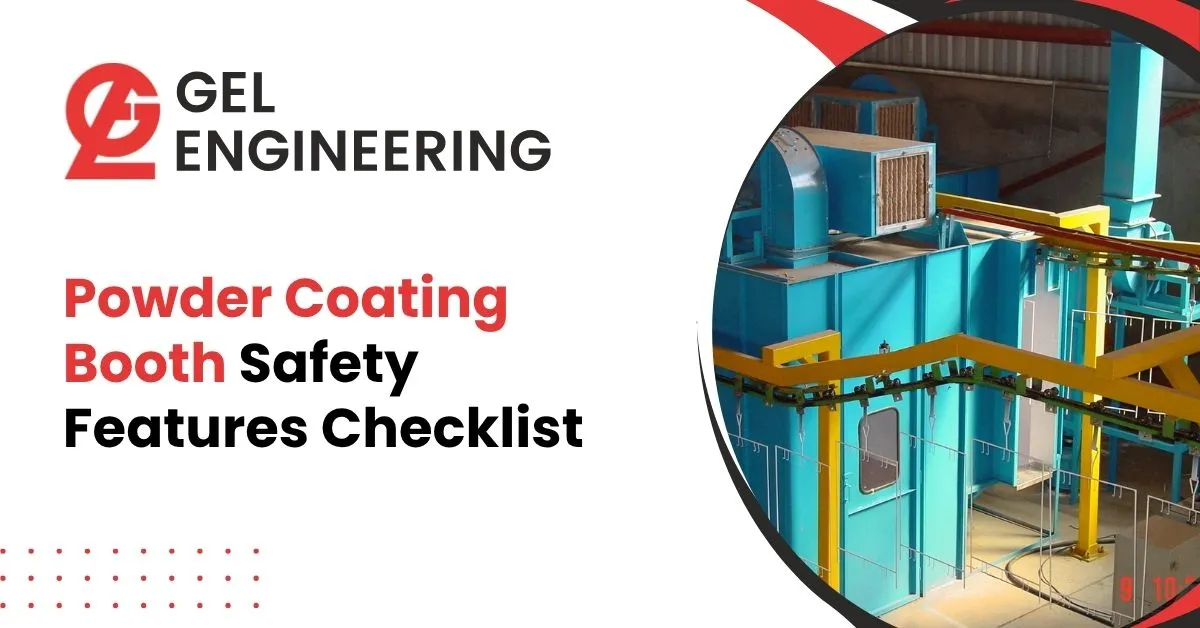
Powder coating is a highly efficient, durable, and eco-friendly finishing process—but working with powder comes with risks. Dust accumulation, electrostatic discharge, and fire or explosion hazards demand a robust safety setup. A well-designed powder coating booth is more than just a place to spray—it’s a carefully engineered environment to protect people, property, and quality. Here’s a comprehensive safety checklist to ensure your booth meets high safety standards.
Table of Contents
1. Structural Safety & Materials
- Non-combustible construction: Booth walls, ceiling, doors, and floor should be made of non-combustible materials (e.g., 18-gauge or thicker steel).
- Clearance: Maintain adequate clearance (e.g., at least three feet) around the booth to reduce fire risk.
- Fire-resistant doors: Doors into the booth should ideally have a fire rating (e.g., 1 hour) for added safety.
2. Ventilation & Airflow Control
- Negative-pressure system: Use exhaust fans to create negative pressure inside the booth; this helps contain overspray and dust.
- Face or capture velocity: Ensure sufficient airflow across the booth opening. According to best practices, this could be ~80–100 fpm (feet per minute) depending on the design.
- Even airflow distribution: Use airflow baffles or carefully placed diffusers to avoid turbulent zones.
- Recirculation / environmental control (optional): If you’re recirculating air, make sure it’s filtered (HEPA, activated carbon) and stable temperature and humidity are maintained.
3. Filtration & Powder Recovery
- High-efficiency filters: Use cartridge filters, cyclone separators, or both to trap overspray.
- Powder reclaim system: Incorporate a reclaim system (e.g., multicyclone) to collect and reuse overspray, reducing waste.
- Filter monitoring: Implement a way to monitor filter performance (like pressure gauges or manometers) and clean or replace filters regularly.
4. Grounding & Electrostatic Safety
- Grounding / bonding: All metallic components — racks, hangers, gun, operator’s footwear — should be properly grounded to prevent static buildup.
- Static control flooring: Consider antistatic or conductive flooring to further reduce risk.
- Electrical equipment rating: Use explosion-proof (ATEX or equivalent) motors, lights, and fans in classified zones.
5. Fire and Explosion Prevention
- Automatic fire suppression: Install fire extinguishing systems (e.g., dry chemical, water mist, CO₂) in the booth, ducting, and filter housing.
- Flame detection: Use flame detectors that can trigger a shutdown of key systems (air supply, spray, transfer, conveyors) within a fraction of a second.
- Electrical interlock: Ensure the spray guns, ventilation, and other equipment interlock so that unsafe conditions shut down operations.
- Dust concentration control: Maintain airborne powder levels well below the Minimum Explosible Concentration (MEC). NFPA guidelines suggest not exceeding 50% of MEC.
Want a reliable and safety-compliant powder coating setup? Reach out to Gel Engineers for engineered booths designed for superior performance.
6. Personal Protective Equipment (PPE)
- Respiratory protection: Use suitable respirators (e.g., half-mask with P3 filters) to protect from fine powder.
- Antistatic coveralls: Full-body, grounded, antistatic clothing helps minimize static discharge and powder adherence.
- Gloves & Footwear: Use powder-free, antistatic gloves; footwear should be conductive or leather to safely dissipate charge.
- Eye protection: Safety goggles / visors meeting relevant standards (e.g., BS EN 166) are recommended.
- Hearing protection: Necessary if working near loud equipment, like curing ovens or compressors.
7. Maintenance & Housekeeping
- Routine cleaning: Use industrial vacuum systems (preferably ATEX-compliant) rather than sweeping.
- Safe cleaning procedure: Avoid using compressed air directly to blow dust; always keep the ventilation system on during cleaning.
- Maintenance schedule: Regularly inspect fans, filters, ductwork, grounding, and fire safety systems.
- Training & risk assessments: Conduct risk assessments per COSHH (or local equivalent) and train staff on safe working practices.
8. Administrative Controls & Procedures
- No smoking / open flame: Strictly forbid any ignition sources in or around the booth.
- Emergency stop access: Ensure emergency stop buttons are easily accessible and regularly tested.
- Fire alarm interlocks: Booth should trigger local fire alarms when a suppression event or flame detection happens.
- Health monitoring: Provide hygiene facilities; employees should wash hands/face and change clothes after work.
- Record keeping: Maintain logs of maintenance, filter changes, grounding continuity tests, and PPE inspections.
9. Regulatory Compliance
- NFPA 33 compliance: Design the booth and operations according to NFPA 33 standards for spray booths to minimize fire / explosion risk.
- Local health and safety law: Follow relevant regulations for dust exposure and PPE (e.g., COSHH in UK, OSHA in the US).
- Electrical standards: Use equipment that meets explosion-proof or intrinsically safe certification.
Frequently Asked Questions
Why is safety important in a powder coating booth?
Safety is crucial because powder particles can become combustible in certain concentrations, and improper grounding or airflow can lead to fires, explosions, or health hazards.
What is the minimum airflow required for a powder coating booth?
Most industrial booths maintain face velocities around 80–100 feet per minute to control overspray and maintain safe negative pressure.
Do powder coating booths need fire suppression systems?
Yes, automatic fire suppression is strongly recommended and often required under safety standards, especially in powder collection areas and ductwork.
Why is grounding important in powder coating?
Proper grounding prevents static electricity from building up, reducing the risk of ignition during electrostatic powder application.
How often should powder coating filters be changed?
It depends on usage, but most facilities inspect filters weekly and replace them when pressure drops indicate reduced efficiency.
Conclusion
Safety in a powder coating booth isn’t optional—it’s essential. Implementing this checklist helps you reduce health risks, prevent dust-related fires or explosions, and create a more efficient, compliant workplace. Whether you’re designing a new booth or auditing an existing one, these safety features should be your baseline.
Related Posts