In industrial spray painting, finish quality depends not only on paint material and technique but…
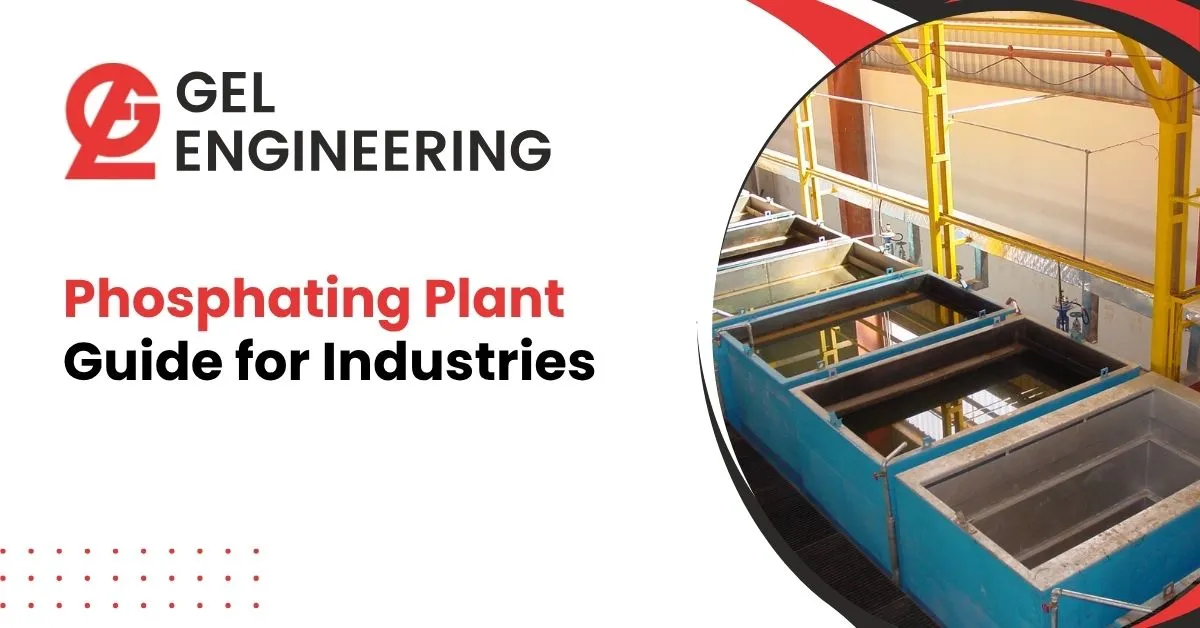
Surface preparation is one of the most important steps in any metal finishing line, and a well-designed phosphating plant helps industries achieve that foundation with consistency. It not only improves coating adhesion but also strengthens corrosion resistance, making metal components more durable in demanding environments. Whether a factory manufactures automotive parts, engineering components, appliances, or heavy fabrication structures, a phosphating plant ensures every surface is clean, uniform, and ready for the next stage of coating. This guide explains how phosphating plants work, the types available, and why industries rely on them for long-term performance and reliable production output, with Gel Engineers providing complete turnkey solutions tailored to modern manufacturing needs.
Table of Contents
What Is a Phosphating Plant?
A phosphating plant is a chemical pre-treatment system used to form a crystalline phosphate layer on metal surfaces. This layer enhances coating adhesion, boosts corrosion resistance, and creates a uniform base for powder coating or liquid painting. The process typically involves cleaning, degreasing, surface activation, phosphating, rinsing, and passivation — all designed to prepare metal surfaces for high-performance finishing.
Why Industries Use Phosphating Plants?
Industries rely on phosphating plants for several reasons:
- Improved paint adhesion for powder and liquid coatings
- Superior corrosion protection due to phosphate conversion layer
- Enhanced durability of end products
- Smooth, uniform, clean surface finish
- Compatibility with automated finishing lines
- Lower rework rates and higher production efficiency
For sectors handling steel, zinc, or aluminum components, phosphating remains one of the most reliable pre-treatment solutions.
How a Phosphating Plant Works?
A typical phosphating plant operates in multiple stages:
1. Degreasing & Cleaning
Removes oil, grease, dust, and contaminants to ensure the chemical layer forms uniformly.
2. Water Rinse
A fresh-water rinse clears traces of chemicals before the next stage.
3. Surface Activation
A fine-grain structure ensures tighter, more uniform phosphate crystals.
4. Phosphating Treatment
The metal reacts with phosphate chemicals to form a crystalline protective coating.
5. Rinsing & Passivation
Reduces chemical carryover, enhances corrosion resistance, and stabilizes the surface.
6. Drying
Ensures a moisture-free surface ready for coating or downstream processes.
Each stage must be monitored for chemical balance, temperature, pH levels, and contact time to achieve consistent output.
Types of Phosphating Plants
Industries select a phosphating system based on production scale, finish requirements, and metal type:
1. Iron Phosphating Plants
Best suited for cost-effective pre-treatment with moderate corrosion resistance. Often used prior to powder coating on general fabricated components.
2. Zinc Phosphating Plants
Provides superior corrosion resistance, ideal for automotive and heavy industrial applications requiring high durability.
3. Manganese Phosphating Plants
Used primarily for wear resistance, lubrication retention, and components exposed to friction.
4. Spray-Type Phosphating Plants
Designed for high-volume automated production lines requiring fast processing and streamlined workflow.
5. Dip-Type Phosphating Plants
Suitable for complex-shaped components, small batch processing, and industries with varied part geometries.
Gel Engineers provides engineered solutions for both spray and dip systems, ensuring optimized workflow for different industrial needs.
Want cleaner surfaces, stronger adhesion, and long-lasting corrosion protection? Contact us today for expert phosphating system guidance.
Key Features of a Modern Phosphating Plant
A well-designed phosphating plant should include:
- Temperature-controlled tanks
- Energy-efficient heating systems
- Automated dosing and chemical monitoring
- High-quality conveyors, pumps, and nozzles
- Sturdy MS/SS construction for long lifespan
- Effective fume extraction systems
- User-friendly control panels
- Adequate insulation for energy savings
These features enhance consistency, reduce operational cost, and increase booth lifespan.
Benefits of Using an Efficient Phosphating Plant
Industries gain multiple advantages by deploying a high-performance phosphating system:
- Longer coating life due to improved adhesion
- Reduced corrosion and rust formation
- Better finish uniformity on complex components
- Higher productivity through automation
- Lower chemical wastage with controlled dosing
- Consistent quality across batches
- Less downtime with easy maintenance designs
With proper operation and maintenance, phosphating plants from Gel Engineers can deliver stable performance for many years.
Maintenance Tips for Phosphating Plants
Regular maintenance ensures reliability and prevents breakdowns:
- Monitor chemical concentration and replenish as required
- Maintain tank temperature consistently
- Clean nozzles, pumps, and filters to prevent clogging
- Inspect heating elements and steam coils regularly
- Keep rinsing tanks fresh to avoid contamination
- Monitor pH levels and sludge buildup
- Conduct monthly preventive maintenance checks
A disciplined maintenance schedule increases plant lifespan and supports uninterrupted production.
Applications of Phosphating Plants
Industries that benefit the most include:
- Automobile & tractor components
- Electrical / appliance manufacturers
- Metal furniture
- General fabrications
- Machinery parts
- Defense and aerospace components
- Power tools and hardware
Phosphating is an essential foundation for any industrial coating process requiring longevity and performance.
Frequently Asked Questions
What is the purpose of a phosphating plant?
A phosphating plant prepares metal surfaces by creating a phosphate layer that improves paint adhesion and corrosion resistance.
Which metals can be treated in a phosphating plant?
Steel, zinc-coated parts, and certain aluminum alloys can be effectively treated through the phosphating process.
What is the difference between iron and zinc phosphating?
Iron phosphating is ideal for general finishing, while zinc phosphating offers stronger corrosion protection for heavy-duty components.
Is phosphating suitable for powder coating lines?
Yes, phosphating is one of the most reliable pre-treatment methods for powder coating, ensuring a clean, uniform, and durable finish.
How often should chemicals be monitored in a phosphating plant?
Chemical concentration, pH, and temperature should be checked daily to maintain consistent output and prevent quality issues.
Conclusion
A phosphating plant is a vital investment for any industry focused on achieving superior surface preparation, corrosion resistance, and coating adhesion. With the right system design, chemical control, and regular maintenance, manufacturers can significantly improve product durability and quality. Gel Engineers specializes in delivering engineered phosphating systems that offer high efficiency, reliability, and long-term performance for all industrial sectors.
Related Posts