In industrial spray painting, finish quality depends not only on paint material and technique but…
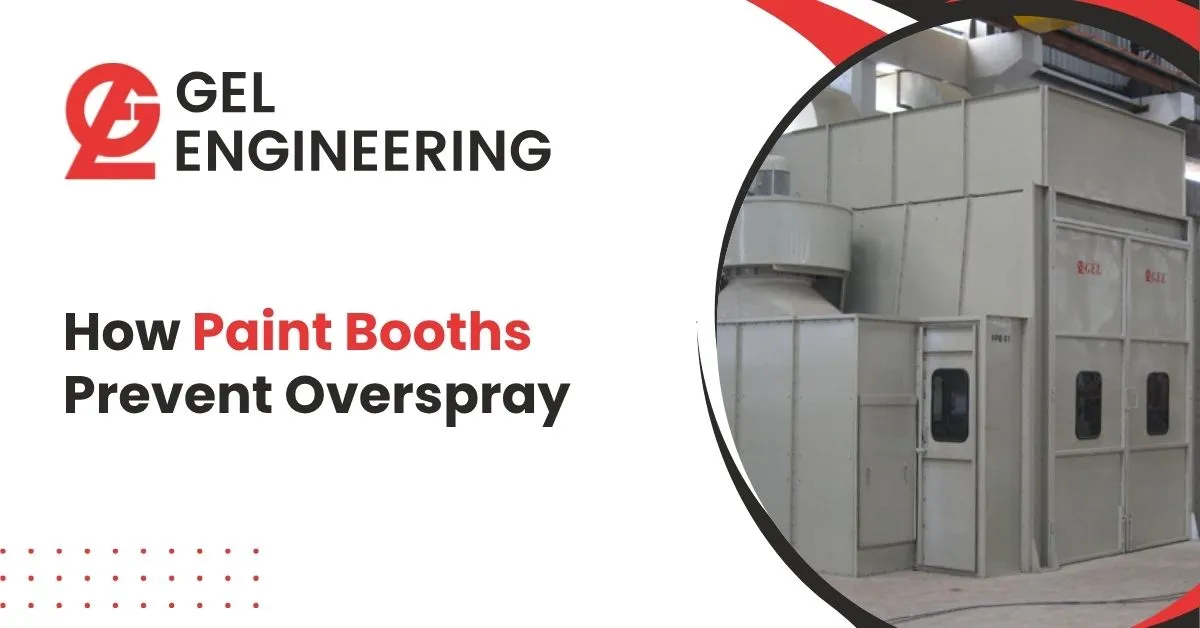
In any industrial painting environment, overspray—the fine mist of paint that misses the target surface—can lead to serious problems. From poor finish quality to health hazards and environmental violations, controlling overspray is essential. Modern paint booths are designed specifically to prevent overspray through engineered airflow, filtration, and containment systems.
What is Overspray?
Overspray refers to airborne paint particles that settle on unintended surfaces during spray painting. It can cause:
- Surface defects like orange peel or dust nibs
- Health risks due to inhaled particles or VOCs
- Contamination of other work areas
- Increased maintenance and cleanup time
How Paint Booths Prevent Overspray?
1. Controlled Airflow Design
Proper airflow is the first defense against overspray. Paint booths use crossdraft, downdraft, or semi-downdraft ventilation systems to direct overspray particles away from the work surface and toward filters.
- Downdraft booths are most effective, pulling overspray straight down and out.
- Crossdraft booths move air horizontally, which is effective for smaller parts or touch-ups.
2. Overspray Arrestor Filters
These filters trap airborne paint particles before they reach exhaust fans or escape into the workspace. Common types include:
- Fiberglass pads
- Polyester panel filters
- Accordion-style cardboard filters
3. Fully Enclosed Booth Structure
Paint booths are enclosed on all sides to keep overspray contained. High-quality door seals and wall panels help prevent particles from escaping into surrounding areas.
4. Negative Pressure Operation
Operating a booth under slightly negative pressure ensures air is always drawn inward, not outward—keeping overspray from leaking into the facility.
Need Help Preventing Overspray in Your Paint Booth? Contact us today for high-performance paint booth solutions tailored to your operations.
5. Clean Air Intake Filtration
By filtering the air entering the booth, intake filters prevent dust and contaminants from mixing with the overspray, improving finish quality and maintaining a clean environment.
Additional Overspray Prevention Tips
- Use proper spray gun technique and settings
- Maintain optimal spray distance and angle
- Regularly replace filters to avoid clogging
- Train operators on overspray reduction methods
Benefits of Overspray Control
- Better paint finish quality
- Safer working conditions
- Easier booth cleaning and maintenance
- Environmental and regulatory compliance
- Reduced paint and material waste
Conclusion
Overspray is a common challenge in spray painting, but a well-designed paint booth with controlled airflow and proper filtration can eliminate this issue. Whether you’re working with automotive parts, aerospace components, or industrial equipment, overspray control is key to efficiency, safety, and superior finishes.
Related Posts