In industrial spray painting, finish quality depends not only on paint material and technique but…
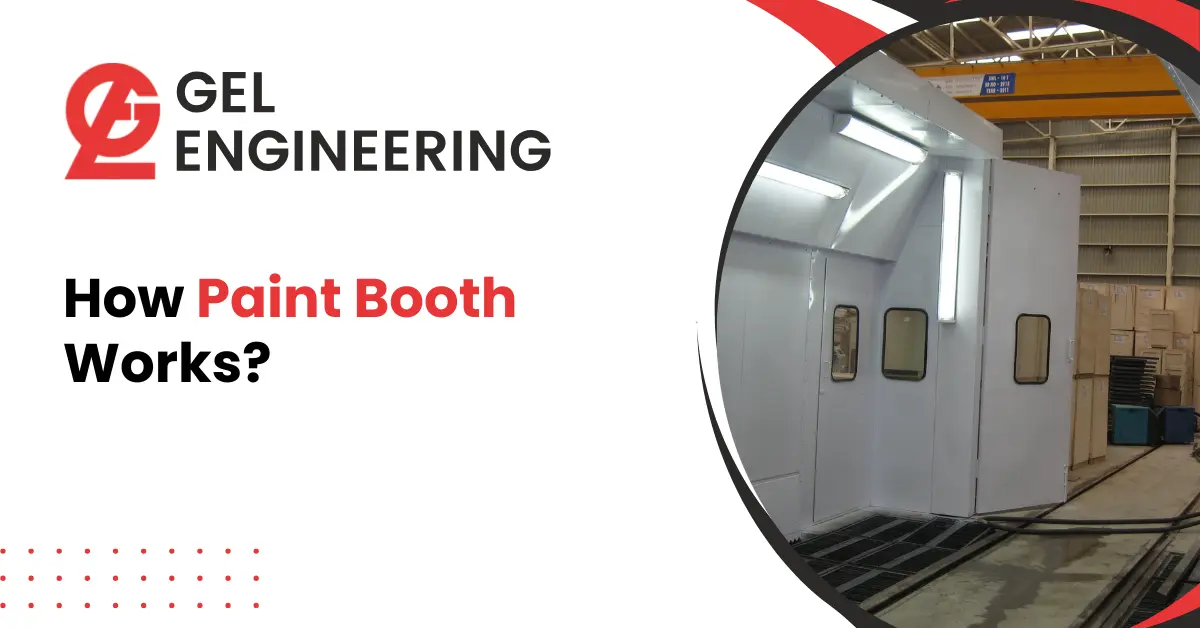
Industrial spray painting requires a clean and controlled environment to achieve a high-quality finish and ensure worker safety. In modern manufacturing, a controlled enclosure called a Paint Booth helps eliminate dust, control airflow, and capture overspray during the painting process. Understanding how this system works helps industries improve coating quality, reduce defects, and increase operational efficiency.
Table of Contents
A controlled enclosure designed for spray painting applications is used to prevent contamination and ensure a smooth finish. In industrial applications, a Paint Booth creates a dust-free and controlled airflow environment that protects painted surfaces from dirt and airborne particles. This controlled system also helps remove harmful fumes and overspray from the workspace.
The primary purpose of this system is to improve coating quality, protect workers, and maintain environmental safety. During spray operations, a properly designed Paint Booth ensures that airflow removes paint particles and prevents contamination from entering the painting area.
Paint Booth Components and Their Functions
Several essential components work together to ensure efficient and safe spray-painting operations. In the center of the airflow and filtration system, a Paint Booth uses intake filters, exhaust systems, fans, and lighting to maintain a clean environment. Each component plays a specific role in controlling airflow and improving paint quality.
| Component | Function | Importance |
| Air Intake System | Supplies fresh filtered air | Prevents contamination |
| Filters | Capture dust and paint particles | Improves finish quality |
| Exhaust System | Removes harmful fumes | Protects workers |
| Fans and Blowers | Maintain airflow | Ensures proper ventilation |
| Lighting | Improves visibility | Ensures precision |
| Booth Structure | Enclosed workspace | Provides controlled environment |
These integrated systems ensure that a properly designed Paint Booth maintains consistent airflow and safe painting conditions.
Paint Booth Working Principle
The working principle is based on controlled airflow, filtration, and safe exhaust removal. During operation, a Paint Booth pulls clean air through intake filters and circulates it evenly across the object being painted. This controlled airflow ensures that contaminants do not affect the painted surface.
First, fresh air enters through intake filters, where dust and particles are removed before reaching the painting area. Inside the enclosure, the Paint Booth directs clean air over the product, allowing the operator to apply paint smoothly and evenly.
Step 1: Fresh Air Intake
The paint booth pulls clean air from outside through the intake system. This air passes through filters that remove dust and contaminants.
Purpose: Ensure clean air enters the booth.
Step 2: Airflow Circulation Inside Paint Booth
Filtered air flows uniformly across the painted object. This controlled airflow prevents dust from settling on the surface.
Purpose: Maintain clean painting conditions.
Step 3: Spray Painting Process
The operator sprays paint using a spray gun. During this process, some paint sticks to the product, and the rest becomes overspray particles.
Purpose: Apply smooth and uniform coating.
Step 4: Overspray Capture and Filtration
The overspray particles are captured by exhaust filters or water curtain systems depending on the paint booth type.
Purpose: Remove harmful paint particles.
Step 5: Exhaust System Removes Contaminated Air
The exhaust fan pulls contaminated air out of the booth and releases clean air safely outside.
Purpose: Protect workers and environment.
Step 6: Continuous Airflow Cycle
This process continues during painting, maintaining clean airflow and safe operation.
Purpose: Ensure consistent paint quality.
Types of Paint Booth and How Each Paint Booth Works?
The Paint Booth types vary based on airflow design, filtration system, and industrial application requirements.
Based on industrial usage, the most common types include:
Dry Paint Booth
Dry filter systems are widely used in industrial painting due to their simplicity and cost-effectiveness. In this filtration-based system, a Paint Booth uses high-efficiency dry filters to capture paint overspray particles before air is released into the environment. These filters are typically made of fiberglass or synthetic media designed to trap fine paint particles.
Working Principle:
- Fresh air enters the booth through intake filters to ensure clean airflow.
- During spray painting, overspray particles are generated inside the Paint Booth and move toward the exhaust section.
- The dry filters capture paint particles and prevent them from escaping into the atmosphere.
- Clean air passes through the exhaust system and is safely released outside.
Water Wash / Water Curtain Paint Booth
Water wash systems provide higher filtration efficiency and are ideal for continuous production environments. In this advanced filtration system, a Paint Booth uses a flowing water curtain to capture paint particles and prevent airborne contamination.
Working Principle:
- Clean air enters through intake filters and flows across the painted object.
- During spraying, overspray particles move toward the rear section of the Paint Booth.
- A continuous water curtain captures paint particles and mixes them with water.
- Contaminated water is collected and treated, while clean air is exhausted safely.
Side Draft Paint Booth
Horizontal airflow systems are designed for efficient contaminant removal in medium-sized applications. In this airflow configuration, a Paint Booth moves clean air from one side of the enclosure to the exhaust filters located on the opposite side.
Working Principle:
- Fresh filtered air enters from the front or side of the booth.
- Air flows horizontally across the painted component inside the Paint Booth.
- Overspray particles are carried toward the exhaust filters.
- The exhaust system removes contaminated air safely.
Down Draft Paint Booth
Vertical airflow systems provide the highest level of paint finish quality and contamination control. In high-performance finishing applications, a Paint Booth with downdraft airflow moves clean air from the ceiling downward toward the floor exhaust system.
Working Principle:
- Fresh filtered air enters through ceiling intake filters.
- Air flows vertically downward across the painted surface inside the Paint Booth.
- Overspray particles are immediately pulled downward.
- Floor-level exhaust filters capture contaminants and remove them safely.
Semi-Down Draft / Pitless Paint Booth
Semi-downdraft systems provide a balance between performance and cost. In this hybrid airflow design, a Paint Booth directs air from the top front area toward the rear bottom exhaust system.
Working Principle:
- Clean air enters from the ceiling front section.
- Air flows diagonally across the painted object inside the Paint Booth.
- Exhaust filters located at the rear bottom capture paint particles.
Cross Draft Paint Booth
Front-to-back airflow systems are commonly used due to their simple design and low cost. In this airflow configuration, a Paint Booth moves air horizontally from the front toward the rear exhaust system.
Working Principle:
- Fresh air enters from the front intake section.
- Air flows directly across the painted object inside the Paint Booth.
- Exhaust filters at the rear capture paint particles.
- Clean air exits through the exhaust system.
Dust Free / Positive Pressure Paint Booth
Cleanroom-style environments require advanced contamination control systems. In this system, a Paint Booth uses positive air pressure to prevent dust from entering the enclosure.
Working Principle:
- Clean filtered air is continuously pushed into the booth.
- Positive pressure prevents external dust from entering the Paint Booth.
- Exhaust system removes contaminated air safely.
Laboratory Paint Booth
Testing and research environments require precise airflow and filtration control. In laboratory applications, a Paint Booth provides a controlled environment for coating experiments and product testing.
Working Principle:
- Clean air enters through intake filters.
- Controlled airflow ensures accurate testing conditions inside the Paint Booth.
- Exhaust system removes contaminants safely.
Retractable Paint Booth
Flexible enclosure systems are used for painting large or oversized components. In heavy industrial applications, a Paint Booth with retractable structure can expand or collapse as needed.
Working Principle:
- The booth structure expands to enclose the painting area.
- Controlled airflow system operates inside the Paint Booth.
- Exhaust system removes paint particles safely.
Paint Booth Airflow System Explained
Airflow plays a critical role in maintaining paint quality and worker safety. During spray operations, a properly designed Paint Booth controls airflow direction to remove overspray and maintain clean conditions.
Common airflow types include:
- Crossdraft airflow
- Downdraft airflow
- Semi-downdraft airflow
- Side draft airflow
Each airflow design ensures that the Paint Booth removes contaminants and maintains optimal painting conditions.
Benefits of Using Paint Booth in Industrial Applications
Industrial coating processes require consistent quality and safe working conditions. By providing controlled airflow and filtration, a Paint Booth improves paint finish quality and protects workers from harmful fumes.
1. Improved Paint Finish Quality
A controlled environment is essential for achieving a smooth and uniform coating finish. During spray operations, a Paint Booth prevents dust, dirt, and airborne particles from settling on the painted surface.
Sub-benefits:
- Ensures smooth and defect-free finish
- Improves paint adhesion and durability
- Reduces rework and repainting
- Enhances product appearance
2. Dust-Free and Contamination-Free Environment
Contamination is one of the main causes of coating defects in industrial painting. By using filtered airflow systems, a Paint Booth prevents external dust and contaminants from entering the painting area.
Sub-benefits:
- Maintains clean painting environment
- Prevents surface defects like bubbles and dust marks
- Ensures consistent coating thickness
- Improves overall coating quality
3. Enhanced Worker Safety and Health Protection
Industrial paints release harmful fumes, chemicals, and overspray particles that can affect worker health. A properly ventilated Paint Booth removes these harmful substances using exhaust systems and filtration.
Sub-benefits:
- Protects workers from toxic fumes
- Reduces inhalation risks
- Improves workplace safety
- Meets occupational safety standards
4. Environmental Protection and Regulatory Compliance
Environmental regulations require industries to control harmful emissions during spray painting. Advanced filtration systems inside a Paint Booth capture paint particles and prevent air pollution.
Sub-benefits:
- Reduces air pollution
- Controls hazardous emissions
- Supports eco-friendly manufacturing
- Ensures compliance with environmental regulations
5. Increased Productivity and Operational Efficiency
Efficient painting systems help reduce downtime and improve production speed. By providing controlled airflow and faster drying conditions, a Paint Booth helps improve overall productivity.
Sub-benefits:
- Reduces production delays
- Improves workflow efficiency
- Supports faster drying time
- Increases production output
6. Reduced Paint Wastage and Cost Savings
Overspray and material loss can increase operational costs. By capturing overspray effectively, a Paint Booth helps optimize paint usage and reduce material waste.
Sub-benefits:
- Saves paint material
- Reduces operational costs
- Improves return on investment
- Enhances cost efficiency
7. Better Process Control and Consistency
Consistent coating quality is essential for industrial manufacturing. With controlled airflow and filtration, a Paint Booth ensures uniform painting conditions.
Sub-benefits:
- Maintains consistent coating results
- Improves quality control
- Reduces product defects
- Enhances manufacturing reliability
Need help choosing the best Paint Booth for your application?
Contact us to speak with our experts and get the best solution.
Applications of Paint Booth in Industries
Surface finishing is a critical process in modern manufacturing, as it improves product durability, appearance, and corrosion resistance. By providing a clean and controlled environment, a Paint Booth ensures professional-quality coating across various industries.
1. Automotive Industry
Vehicle manufacturing and refinishing require high-quality coating for protection and appearance. A Paint Booth ensures dust-free painting conditions and professional finishes.
Sub-applications:
- Car body painting
- Truck and bus painting
- Auto parts coating
- Vehicle refinishing
2. Furniture Manufacturing Industry
Furniture products require protective and decorative coatings to enhance durability and visual appeal. A controlled environment inside a Paint Booth ensures consistent finish quality.
Sub-applications:
- Wooden furniture coating
- Metal furniture painting
- Modular furniture finishing
- Office furniture coating
3. Industrial Equipment and Machinery
Industrial machines require protective coatings to prevent corrosion and wear. By ensuring uniform coating application, a Paint Booth improves equipment lifespan.
Sub-applications:
- Heavy machinery coating
- Industrial tools painting
- Fabricated metal parts coating
- Equipment surface finishing
4. Aerospace Industry
Aircraft components require high-precision coating to meet strict quality and safety standards. A controlled airflow system inside a Paint Booth ensures defect-free finishes.
Sub-applications:
- Aircraft body coating
- Aerospace components painting
- Aviation equipment finishing
5. Electronics and Appliance Manufacturing
Electronic products require protective coatings for durability and environmental resistance. A clean environment inside a Paint Booth ensures consistent and high-quality finishes.
Sub-applications:
- Appliance panel coating
- Electronic enclosure painting
- Metal casing finishing
6. Heavy Equipment and Construction Industry
Construction and agricultural equipment operate in harsh environments and require protective coatings. A Paint Booth ensures strong adhesion and long-lasting protection.
Sub-applications:
- Construction equipment painting
- Agricultural machinery coating
- Structural steel coating
7. Metal Fabrication and Engineering Industry
Fabricated metal components require protective coatings to prevent rust and corrosion. A controlled airflow system inside a Paint Booth ensures consistent coating performance.
Sub-applications:
- Structural steel painting
- Sheet metal coating
- Engineering components finishing
Paint Booth Safety Features
Worker safety is critical in spray painting environments. Modern safety systems ensure that a Paint Booth protects operators from harmful fumes and fire hazards.
Important safety features include:
- Explosion-proof fans
- Fire suppression systems
- Proper ventilation
- High-efficiency filtration
These safety systems allow a Paint Booth to operate safely in industrial environments.
Paint Booth Maintenance Guide
Regular maintenance is necessary for optimal performance and long service life. Proper inspection and cleaning ensure that a Paint Booth continues to operate efficiently and safely.
Maintenance includes:
- Filter replacement
- Cleaning interior surfaces
- Inspecting fans and motors
- Monitoring airflow performance
Proper maintenance ensures that the Paint Booth delivers consistent painting results.
Frequently Asked Questions
How does Paint Booth work?
A Paint Booth works by pulling clean air through filters, circulating it over the painted object, capturing overspray, and removing contaminated air through an exhaust system.
What is the purpose of Paint Booth?
The main purpose of Paint Booth is to provide a clean, safe, and controlled environment for spray painting.
Why is Paint Booth important in industry?
Paint Booth improves coating quality, protects workers, and prevents contamination during spray painting.
Which Paint Booth gives best finish quality?
Downdraft Paint Booth provides the best finish quality due to vertical airflow.
What industries use Paint Booth?
Automotive, aerospace, furniture, and manufacturing industries use Paint Booth for coating applications.
Conclusion
A properly designed and operated Paint Booth plays a vital role in modern industrial painting and surface finishing processes. By creating a controlled, dust-free environment with proper airflow and filtration, it ensures high-quality paint finishes, improves coating consistency, and enhances overall product durability. This controlled system helps industries achieve professional results while minimizing defects caused by dust, contamination, and uneven paint application.
Related Posts