In industrial spray painting, finish quality depends not only on paint material and technique but…
Maximizing Efficiency, Safety, and Air Quality in Your Spray Booth
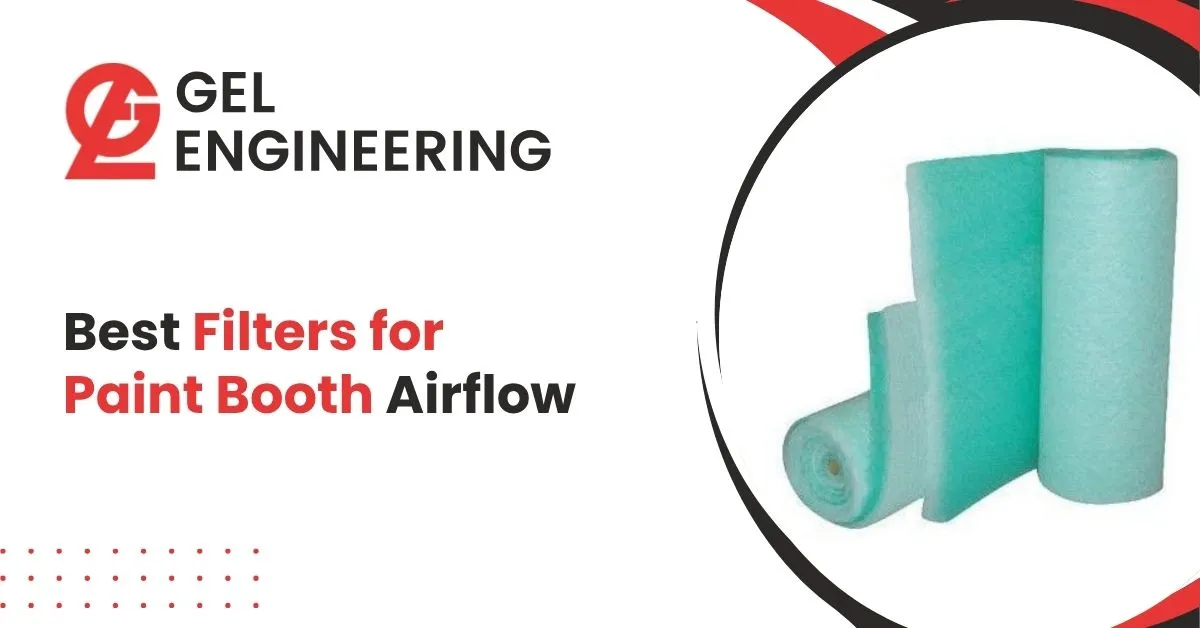
In any paint booth, clean and controlled airflow is critical to achieving high-quality finishes and protecting workers from hazardous overspray and fumes. The best filters for paint booth airflow are designed to trap particulates, remove contaminants, and maintain compliance with safety and environmental regulations.
Whether you’re operating a booth in automotive, aerospace, industrial, or furniture sectors, choosing the right filters helps extend equipment life, improve coating quality, and ensure workplace safety.
Types of Filters Used in Paint Booths
1. Intake Filters
Purpose: Clean incoming air to prevent dust and debris from contaminating freshly painted surfaces.
Best For: Ensuring a clean finish, especially in automotive and aerospace applications.
2. Overspray Arrestor Filters (Pre-Filters)
Purpose: Capture excess paint particles (overspray) before they reach the exhaust or recirculate.
Best For: All paint booth types—cross draft, downdraft, and semi-downdraft.
3. Exhaust Filters
Purpose: Remove volatile organic compounds (VOCs), solvents, and fine particles from outgoing air.
Best For: Meeting regulatory compliance and protecting the external environment.
Recommended Type:
- Activated carbon filters (for VOCs)
- HEPA filters (for fine particulates)
- Bag filters (for large-scale systems)
4. HEPA Filters (High-Efficiency Particulate Air)
Purpose: Trap 99.97% of particles ≥0.3 microns in diameter.
Best For: Cleanroom-grade booths, aerospace, and electronics painting.
Required by: ISO 14644-1 cleanroom classification.
Need Paint Booth Filters? Contact us today for expert advice and high-performance filtration solutions.
5. Activated Carbon Filters
Purpose: Adsorb gases, fumes, and VOCs from the airstream.
Best For: Finishing operations involving solvent-based paints or flammable chemicals.
Benefits: Odor control, regulatory compliance, and improved worker safety.
Choosing the Right Filter: Key Considerations
- Paint Type (solvent-based, water-based)
- Booth Design (open-face, enclosed, downdraft)
- Airflow Volume
- Compliance Requirements (OSHA, EPA, ISO)
- Maintenance Frequency and replacement cost
Frequently Asked Questions
What is the purpose of filters in a paint booth?
Filters in a paint booth ensure clean airflow by trapping dust, paint overspray, fumes, and volatile organic compounds (VOCs). They help improve finish quality, protect workers, and maintain compliance with environmental and safety regulations.
Which filters are best for capturing paint overspray?
Overspray arrestor filters, such as fiberglass pads or accordion-style cardboard filters, are most effective for capturing excess paint particles before they reach the exhaust system.
Do I need both intake and exhaust filters in my paint booth?
Yes. Intake filters keep incoming air clean to prevent surface contamination, while exhaust filters trap paint particles and harmful VOCs before the air is released outside.
What is the role of HEPA filters in paint booths?
HEPA filters remove 99.97% of particles as small as 0.3 microns and are used in cleanroom applications or industries like aerospace and electronics where ultra-clean environments are required.
When should paint booth filters be replaced?
Filter replacement depends on usage frequency, paint type, and booth conditions. Intake and overspray filters typically require replacement every 2–4 weeks, while HEPA and carbon filters may last 3–6 months with regular inspection.
Are activated carbon filters necessary?
Yes, especially when using solvent-based paints. Activated carbon filters adsorb VOCs and odors, ensuring compliance with environmental standards and improving workplace air quality.
Conclusion
Using the best filters for paint booth airflow not only ensures a high-quality finish but also protects workers, equipment, and the environment. From HEPA intake filters to activated carbon exhaust filters, each type plays a crucial role in maintaining safe and efficient operations.
Related Posts